Table of Contents
What Is HDMI Encoder IPTV?
The streaming industry in the United States continues expanding rapidly as businesses, broadcasters, content creators, and IPTV providers search for better ways to deliver high-quality video content online. One technology becoming increasingly important in this market is hdmi encoder iptv solutions. These systems help convert HDMI video signals into digital streams that can be transmitted through IPTV networks, streaming platforms, and online broadcasting services. As more users consume live television, sports events, educational content, and entertainment through internet-based systems, HDMI encoder IPTV technology has become a key part of modern video delivery infrastructure.
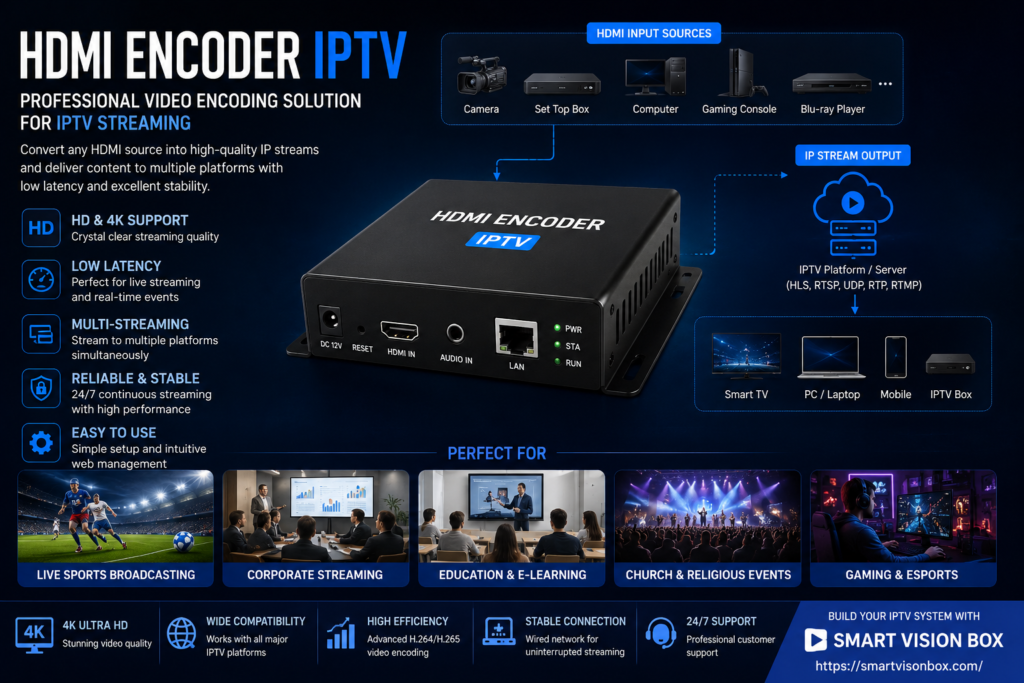
An HDMI encoder IPTV device works by taking video and audio signals from sources such as cameras, gaming consoles, satellite receivers, computers, or media players and converting them into streaming formats compatible with IPTV platforms. This process allows broadcasters and businesses to distribute live or recorded content efficiently across networks while maintaining high video quality. In the USA, demand for IPTV solutions continues growing because audiences now prefer flexible streaming access instead of traditional cable television subscriptions.
One of the main reasons why HDMI encoder IPTV systems are becoming popular is streaming efficiency. Businesses need reliable solutions capable of delivering stable video performance with minimal delays and buffering interruptions. High-quality encoders improve transmission quality while supporting HD and 4K resolutions required by modern viewers. Combined with professional IPTV systems available through Smart Vision Box, HDMI encoder IPTV technology helps organizations build reliable streaming infrastructures suitable for multiple industries.
Another important factor is compatibility. Modern HDMI encoder IPTV devices support different protocols and streaming standards, making them adaptable for television broadcasting, corporate streaming, online education, surveillance systems, and entertainment platforms. As streaming technology evolves across the USA, HDMI encoder IPTV solutions continue becoming essential tools for businesses looking to improve content delivery and audience engagement in 2026.
Why HDMI Encoder IPTV Is Growing in the USA
The American streaming market has changed dramatically during recent years as viewers increasingly move away from traditional television systems and embrace internet-based entertainment platforms. This shift has created strong demand for professional streaming technologies capable of supporting large-scale content delivery. One solution experiencing rapid growth is hdmi encoder iptv technology because it helps businesses and IPTV providers distribute high-quality video streams more efficiently.
One major reason for this growth is the increasing popularity of live streaming. Sports broadcasters, churches, educational institutions, gaming creators, and media companies now rely heavily on online video delivery to reach audiences across different devices. HDMI encoder IPTV systems simplify this process by converting HDMI signals into network-ready streams suitable for IPTV broadcasting and online distribution platforms.
Another important factor behind the expansion of HDMI encoder IPTV technology is video quality expectations. Modern viewers in the USA expect HD and 4K streaming experiences with smooth playback and minimal buffering. Poor-quality video streams can reduce viewer engagement and damage professional credibility. HDMI encoder IPTV solutions help improve stability and optimize transmission performance, creating more reliable viewing experiences for audiences.
Scalability is also contributing to the popularity of HDMI encoder IPTV systems. Businesses often need flexible streaming infrastructures capable of handling multiple channels and larger audiences over time. Professional encoder solutions allow organizations to expand their IPTV operations more efficiently while maintaining video quality and network performance.
Another advantage is multi-platform compatibility. HDMI encoder IPTV systems can support streaming across smart TVs, computers, smartphones, IPTV boxes, and online video platforms simultaneously. This flexibility is extremely important in the USA where audiences consume content through different devices depending on their viewing preferences. Businesses working with streaming platforms and IPTV providers such as Smart Vision Box can therefore build more professional and scalable video distribution systems for modern entertainment and broadcasting environments.
Main Features of HDMI Encoder IPTV Systems
Modern hdmi encoder iptv systems include several advanced features designed to improve streaming quality, network efficiency, and content delivery reliability. As streaming becomes more competitive across the USA, businesses and broadcasters increasingly prioritize encoder solutions capable of supporting professional video distribution without technical complications or unstable performance.
One important feature is video compression support. HDMI encoder IPTV devices typically support advanced compression standards such as H.264 and H.265. These technologies help reduce bandwidth usage while maintaining high-definition video quality. Efficient compression is essential because it allows IPTV providers and broadcasters to deliver smoother streams to viewers without excessive network strain.
Low-latency streaming is another major advantage of professional HDMI encoder IPTV systems. Many industries including sports broadcasting, gaming streams, live events, and corporate presentations require minimal transmission delay between the video source and the audience. Encoder optimization helps reduce latency and improve real-time streaming performance, which is extremely important for interactive content environments.
Modern streaming technology continues transforming the way audiences consume entertainment, educational content, and live broadcasts across the United States. Internet-based video delivery systems now play a major role in business communication, online education, sports broadcasting, and digital entertainment because viewers expect flexible access to content from different devices and locations. As streaming demand increases every year, organizations are searching for professional solutions that improve reliability, playback stability, and overall viewing quality without creating unnecessary technical complexity. IPTV infrastructure has therefore become increasingly important for companies and broadcasters looking to deliver smooth streaming experiences while supporting modern audience expectations. High-quality systems also help improve scalability, allowing businesses to expand their services and reach larger audiences more efficiently over time. Reliable platforms and optimized hardware contribute significantly to stable video delivery, especially during live events and high-traffic streaming periods. Professional solutions available through Smart Vision Box continue supporting businesses seeking flexible and modern IPTV environments suitable for evolving digital media industries.
The growth of online streaming has also influenced how organizations approach communication and audience engagement in today’s digital world. Businesses increasingly use streaming platforms for conferences, product launches, training sessions, and corporate presentations because internet-based broadcasting offers greater accessibility and flexibility compared to traditional methods. Educational institutions and media creators also benefit from reliable streaming infrastructure that allows them to distribute content efficiently across multiple regions and devices. Stable playback conditions, organized content management, and scalable network systems help improve user satisfaction while supporting long-term operational performance. Modern viewers now prioritize convenience, smooth navigation, and high-definition video quality when choosing entertainment and streaming services. Because of these expectations, businesses continue investing in technologies capable of delivering professional and reliable broadcasting experiences. IPTV systems supported by providers such as Smart Vision Box help organizations adapt to changing market demands while improving content accessibility and streaming performance for modern digital audiences.
Digital broadcasting environments continue evolving rapidly as internet speeds improve and audiences consume more content through connected devices every day. Smart TVs, tablets, computers, and mobile phones now form part of everyday entertainment habits, encouraging businesses and IPTV providers to create more flexible and scalable streaming infrastructures. Modern broadcasting systems must therefore support multiple devices, different viewing resolutions, and stable playback performance simultaneously. Streaming reliability has become one of the most important factors influencing viewer satisfaction because audiences expect uninterrupted access to live channels, entertainment content, educational programs, and online events. Organizations investing in modern IPTV solutions often focus on improving transmission quality and operational efficiency while reducing buffering and network instability. Advanced streaming systems also help businesses adapt to future technological developments more effectively as digital media consumption continues expanding worldwide. Companies working with IPTV providers like Smart Vision Box can therefore build stronger and more adaptable broadcasting environments capable of supporting long-term streaming growth and changing audience expectations in the years ahead.
Another valuable feature is multi-stream capability. Some HDMI encoder IPTV devices can simultaneously generate multiple streams with different resolutions and bitrates. This flexibility allows businesses to serve audiences using different internet speeds and viewing devices more efficiently. Adaptive streaming improves accessibility and enhances user experience across smart TVs, mobile devices, and IPTV platforms.
Audio quality also plays a significant role in streaming performance. Professional HDMI encoder IPTV systems support synchronized high-quality audio transmission alongside video streams. Stable audio-video synchronization helps improve viewer satisfaction and creates a more professional broadcast environment.
Compatibility with IPTV platforms and network protocols further increases the usefulness of HDMI encoder IPTV technology. Businesses can integrate encoder systems with IPTV middleware, content delivery networks, and broadcasting infrastructures more effectively. Streaming providers using solutions from Smart Vision Box can therefore build reliable IPTV ecosystems suitable for modern streaming requirements in the United States.
How HDMI Encoder IPTV Improves Streaming Quality
Streaming quality has become one of the most important factors influencing viewer satisfaction in modern IPTV environments. Audiences expect smooth playback, high-definition visuals, and stable connections whether they are watching sports, entertainment, educational content, or corporate broadcasts. This is where hdmi encoder iptv technology becomes extremely valuable for streaming providers and businesses seeking professional video delivery solutions.
One of the primary ways HDMI encoder IPTV systems improve streaming quality is through optimized signal conversion. HDMI video sources such as cameras, satellite receivers, gaming systems, and media players produce raw video signals that must be converted into IPTV-compatible formats before distribution. Encoder technology performs this conversion efficiently while preserving visual clarity and reducing transmission errors.
Bandwidth optimization is another critical advantage. High-resolution video streaming can consume large amounts of network capacity if not compressed correctly. HDMI encoder IPTV devices use advanced encoding standards to maintain strong image quality while minimizing bandwidth requirements. This balance helps improve stream stability and reduces buffering issues for viewers using different internet speeds.
Another important improvement involves scalability. Streaming businesses often need to deliver content to large audiences simultaneously across multiple platforms and devices. Professional HDMI encoder IPTV solutions help maintain stable performance even during high traffic periods, ensuring audiences receive smoother playback experiences without major interruptions.
Stream reliability is also essential for IPTV providers and broadcasters operating in competitive markets. Unstable video delivery can negatively impact viewer retention and overall service reputation. Businesses using professional IPTV infrastructure from Smart Vision Box can combine encoder technology with reliable IPTV systems to improve content distribution and strengthen streaming performance.
As video quality standards continue increasing in the USA, HDMI encoder IPTV solutions remain important for organizations seeking professional streaming systems capable of supporting modern IPTV broadcasting demands.
Best Uses for HDMI Encoder IPTV
The flexibility of hdmi encoder iptv technology allows it to support many industries and professional streaming environments across the United States. As internet-based broadcasting becomes more common, businesses increasingly rely on IPTV solutions capable of distributing live and recorded video content efficiently to multiple audiences and devices.
One popular use involves television broadcasting and IPTV channel distribution. Broadcasters use HDMI encoder IPTV systems to convert live television feeds into digital streams suitable for IPTV platforms. This helps providers distribute entertainment, sports, and news channels through internet networks while maintaining high-quality playback conditions for viewers.
Corporate streaming is another growing application. Businesses often conduct online conferences, training sessions, product launches, and internal presentations requiring stable video distribution. HDMI encoder IPTV systems allow companies to broadcast professional-quality streams to employees and clients located in different regions.
Educational institutions also benefit from HDMI encoder IPTV technology. Schools, universities, and online training organizations now use IPTV systems for remote learning, lecture broadcasting, and virtual classrooms. Reliable encoder solutions help maintain stable video quality while supporting larger audiences participating in online education programs.
Religious organizations increasingly rely on IPTV broadcasting as well. Churches and community groups stream live events and services to members who cannot attend physically. HDMI encoder IPTV systems improve stream reliability and help organizations maintain professional online broadcasts for growing digital audiences.
Gaming creators and esports broadcasters also use HDMI encoder IPTV technology to distribute gameplay streams with minimal delay and strong visual performance. High-quality encoder systems help improve audience engagement during live streaming sessions and competitive tournaments.
Businesses seeking professional IPTV infrastructure often work with providers like Smart Vision Box to build scalable and reliable streaming environments suitable for modern broadcasting requirements across multiple industries.
Choosing the Right HDMI Encoder IPTV Device
Selecting the correct hdmi encoder iptv device is extremely important for achieving stable streaming performance and long-term reliability. Different businesses and broadcasters have different requirements depending on audience size, streaming quality expectations, and network infrastructure. Understanding these factors helps organizations invest in IPTV solutions that match their operational goals.
One important consideration is video resolution support. Modern audiences increasingly expect Full HD and 4K streaming experiences, especially for sports broadcasting, entertainment channels, and live events. Choosing HDMI encoder IPTV devices capable of supporting high-resolution content helps businesses remain competitive in the growing IPTV market.
Compression technology is another essential factor. Devices supporting advanced codecs such as H.264 and H.265 provide better bandwidth efficiency while maintaining strong image quality. Efficient encoding helps reduce network strain and improves playback conditions for viewers accessing streams through different internet speeds.
Scalability also matters significantly. Businesses planning future expansion should choose HDMI encoder IPTV systems capable of supporting additional channels and larger audiences over time. Flexible infrastructure allows organizations to grow their IPTV operations without replacing their entire streaming system.
Reliability and technical support are equally important when selecting IPTV equipment. Streaming interruptions and unstable broadcasts can negatively impact professional reputation and viewer trust. Businesses working with trusted IPTV providers like Smart Vision Box can access professional solutions designed for modern IPTV broadcasting environments in the USA.
Device compatibility should also be evaluated carefully. HDMI encoder IPTV systems must integrate smoothly with IPTV middleware, servers, streaming platforms, and content delivery networks. Proper compatibility helps simplify deployment while improving operational efficiency across broadcasting infrastructures.
As IPTV technology continues evolving, organizations investing in reliable HDMI encoder IPTV systems position themselves for stronger long-term streaming performance and improved audience engagement.
Future Trends in HDMI Encoder IPTV Technology
The future of hdmi encoder iptv technology looks extremely promising as streaming demand continues increasing across the United States. Businesses, broadcasters, educational institutions, and entertainment providers are all investing more heavily in IPTV infrastructure capable of supporting modern digital audiences and higher video quality standards.
One important trend involves greater adoption of 4K and ultra-high-definition streaming. Viewers increasingly expect sharper visuals and more immersive video experiences across sports, entertainment, gaming, and live broadcasting environments. HDMI encoder IPTV systems will therefore continue evolving to support higher resolutions while maintaining efficient bandwidth usage and stable transmission quality.
Artificial intelligence and automated streaming management may also become more common within IPTV infrastructures. Advanced systems could help optimize bitrate allocation, improve network efficiency, and reduce buffering automatically based on audience conditions and device capabilities. These innovations may improve overall streaming reliability for IPTV providers operating large-scale networks.
Cloud-based IPTV broadcasting is another important trend shaping the future of HDMI encoder IPTV systems. More organizations are moving away from traditional on-site infrastructures and adopting cloud streaming environments that provide greater flexibility and scalability. Cloud integration allows businesses to distribute content more efficiently while reducing hardware maintenance requirements.
Security improvements will also remain important as IPTV networks continue expanding. Businesses need reliable protection against unauthorized access and stream piracy. Advanced encryption and secure streaming protocols are therefore expected to become more integrated into professional HDMI encoder IPTV systems during the coming years.
Providers such as Smart Vision Box continue supporting IPTV innovation by offering solutions designed for modern broadcasting requirements. As streaming technology advances further, HDMI encoder IPTV systems will likely remain essential tools for organizations seeking reliable and scalable digital broadcasting infrastructures.
FAQ About HDMI Encoder IPTV
What is an HDMI encoder IPTV device?
An HDMI encoder IPTV device converts HDMI video signals into IPTV-compatible streams for online broadcasting and IPTV distribution.
Why is HDMI encoder IPTV important?
It helps businesses and broadcasters deliver stable HD and 4K video streams across IPTV networks and streaming platforms.
Which industries use HDMI encoder IPTV technology?
Television broadcasters, churches, educational institutions, gaming creators, and businesses commonly use HDMI encoder IPTV systems.
Does HDMI encoder IPTV support 4K streaming?
Yes, many modern HDMI encoder IPTV devices support Full HD and 4K video resolutions.
Where can businesses find IPTV solutions?
Professional IPTV systems and streaming solutions are available through Smart Vision Box.
Final Thoughts
The rapid growth of online streaming and IPTV broadcasting continues increasing demand for reliable video distribution technologies across the USA. HDMI encoder IPTV systems help businesses, broadcasters, educational institutions, and content creators deliver high-quality streams more efficiently while supporting modern audience expectations.
As streaming quality standards continue evolving, organizations investing in scalable IPTV infrastructure and professional encoder technology position themselves for stronger long-term performance and audience engagement. Reliable IPTV providers such as Smart Vision Box help businesses build modern streaming environments capable of supporting future broadcasting demands.
BUY NOW
Upgrade your streaming infrastructure today with professional IPTV solutions from Smart Vision Box and experience reliable high-quality broadcasting for your business.